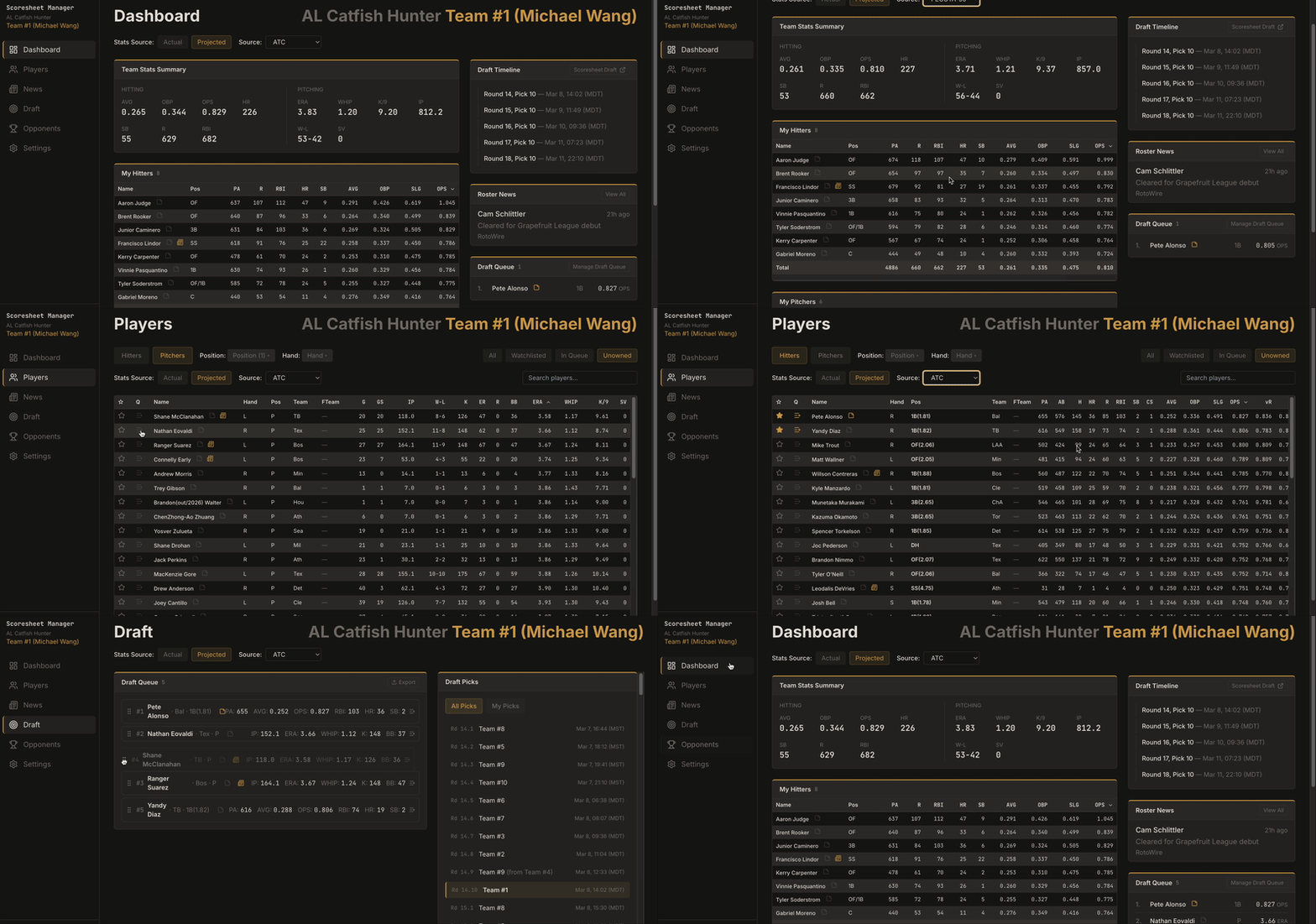
Scoresheet Baseball Manager
A full-stack fantasy baseball app built with AI-native dev tools — and an experiment in what the modern dev flow actually looks like.
The existing tools for managing a Scoresheet fantasy baseball team are dated and manual — scattered spreadsheets, individual stat lookups, and copy-paste interfaces.
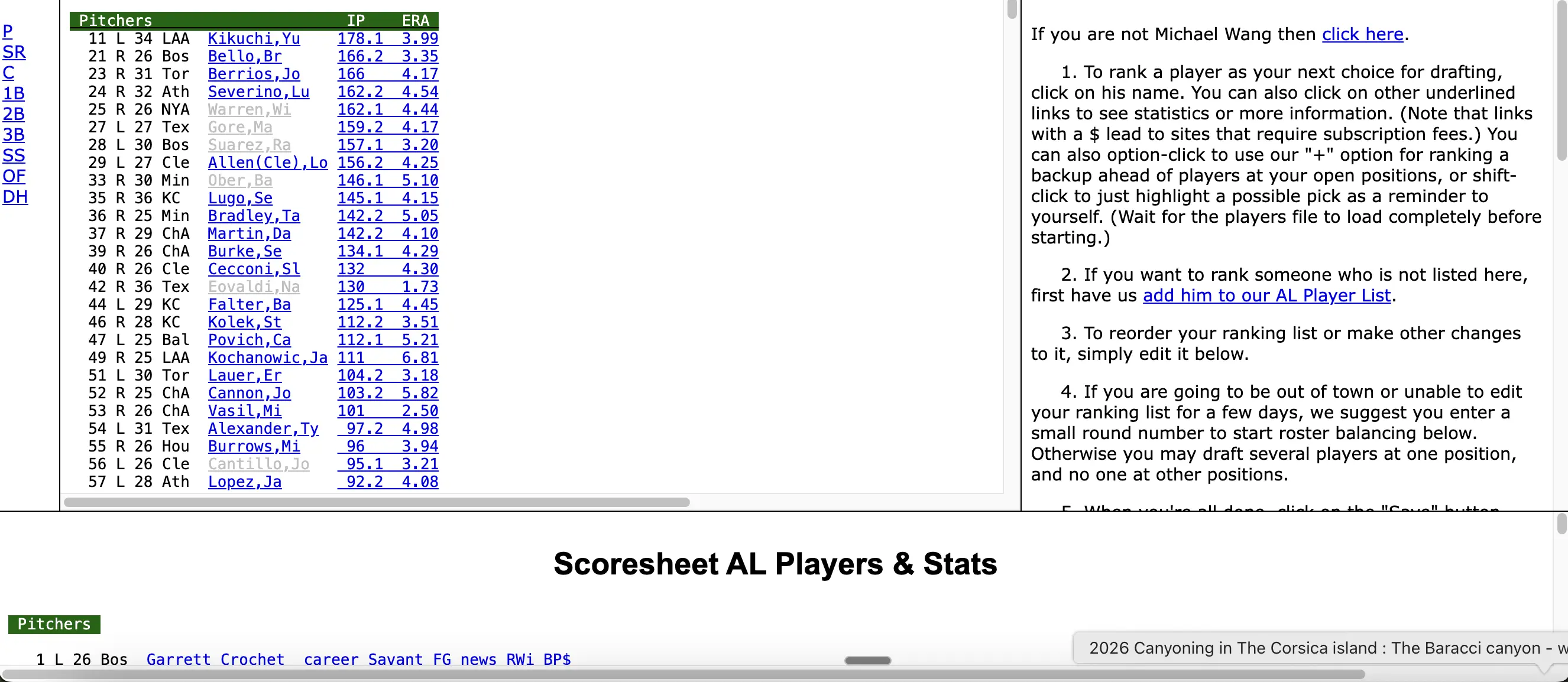
But this project wasn't just about building a better tool. It was an experiment in running the full product lifecycle with AI-assisted development: Claude Code as the primary coding agent, Linear MCP for task planning, Next.js frontend, FastAPI backend, Railway for deployment, and PostHog for analytics. The domain was chosen because it's a real problem I care about — authentic requirements to test the workflow against.
Two key learnings from the process.
Deployment and intersystem comms still have friction. The AI was exceptional inside a single codebase — auth systems, relational schemas, API endpoints, dense mobile-responsive UI — all produced at speed. But hitting the deployment wall was jarring. Dependency format mismatches, dynamic port configs, health check failures across the frontend/backend/database/deploy boundary. Railway has an MCP but giving an agent full deploy access felt risky. The seams between systems are where agent-assisted dev still needs the most work.
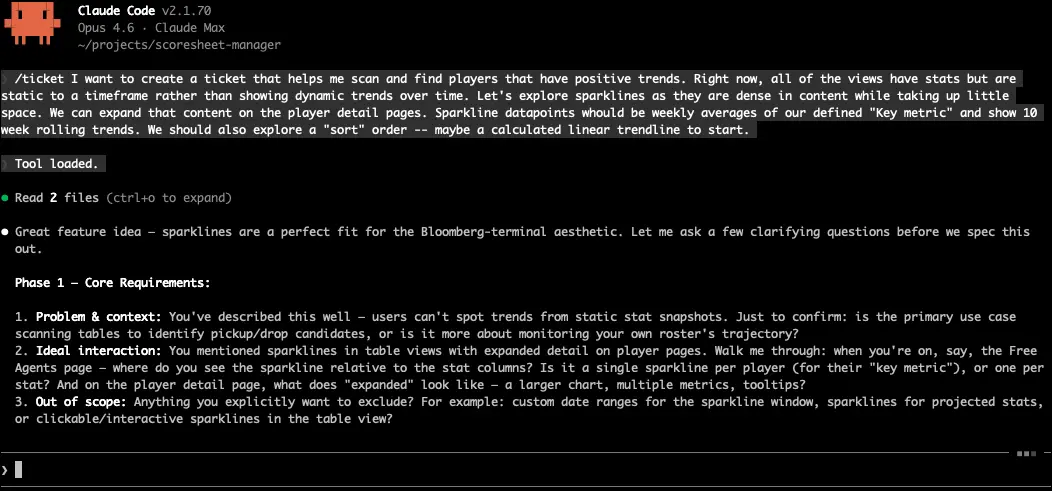
Improving the dev flow over time. Started with an expensive plan/iterate/plan loop. Claude was good at writing code but not at codifying what to build — so instead of burning cycles iterating through planning rounds and waiting on code, I built a /ticket skill that generates structured requirements, NFRs, acceptance criteria, and tests for each Linear ticket. Front-loading that thinking meant features landed right the first time instead of ping-ponging between planning and implementation. The result: 1,580+ tests, 115+ PRs merged, 11 architecture docs — a real engineering process, not just vibes-driven prompting.
The app is deployed and in active use for the 2026 MLB season — 8 Railway services, daily automated stat pipelines, and a dashboard designed to answer "what do I need to know today?" in one screen. But the real outcome was the learnings about where AI-assisted development works and where it doesn't. Three championships in six years, going for four in seven. The tool is live, the season is underway, and both the product and the dev flow will keep getting sharper.